Why Buying Different Plants Isn’t Enough to Build Climate Resilient Gardens
Hello gardeners!
Most gardeners can agree that the extreme weather events of the past five years have changed how our gardens are growing. Climate change is no longer theoretical. As observant gardeners we can see the direct impact environmental factors are having on the garden system of plants, trees, soil, and water.
Climate Change Has Changed Gardening But Gardening Guidance Remains Unclear
The last couple of years, every garden lecture I listen to, starts with acknowledging climate change and then the message to gardeners is "we need to do things differently". That much is clear.
What is less clear is how.
Why Buying Drought-Tolerant and Native Plants Isn’t Enough
The guidance that follows is usually the same. Gardeners are encouraged to buy drought-tolerant plants, fire-smart plants, pollinator plants, or native plants. While these categories can be helpful, buying plants is increasingly positioned as the primary response to climate change in the garden.
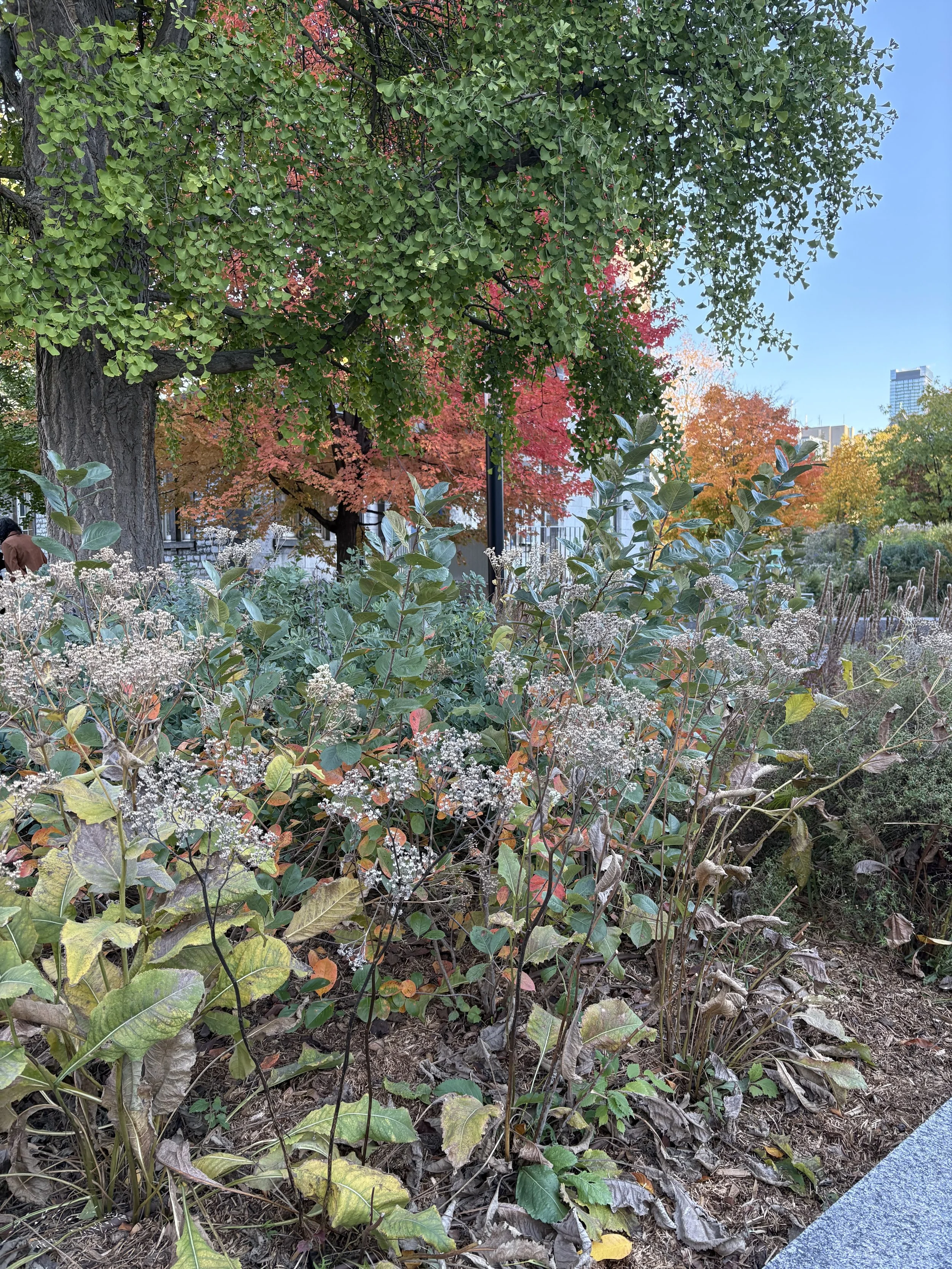
Photo credit: R. Pak
This is a “pollinator-friendly” planting in a commercial setting. When established beds are removed to create new ones, it raises questions about waste, soil disturbance, and environmental footprint. Would strengthening an existing planting—by adding select pollinator plants—have been a more resilient and lower-impact approach?
…And that’s where the problem begins
Changing what we plant without examining how we garden, places too much weight on plant choice alone. It suggests that resilience can be purchased, rather than cultivated through practice. I support the principle of right plant, right place as much as any other experienced gardener but I believe we need to consider gardening methods to cultivate true climate resilience. Currently the answer to gardening or climate woes remains focused on consumption at a time when many gardeners are actively trying to reduce their environmental footprint.
This isn’t about bad intentions. Nurseries, educators, and plant growers are responding to real pressures—climate extremes, market demand, and the need to stay economically viable. And gardeners generally love getting new plants. But when every climate-aware solution points back to buying more plants, something important gets overlooked.
Gardens don’t fail simply because the wrong species were chosen. They struggle because plants are planted into stressed garden systems. Compacted soil, disrupted microbial life, excessive disturbance from over digging, shallow watering regimes, all weaken a garden’s ability to respond to sudden environmental shifts. No plant label can compensate for that.
The idea of buying drought-tolerant plants, native plants or plants for pollinators to solve the issue over simplifies the resilience of plants. While they can play an important ecological role, their effectiveness depends on timing, soil health, surrounding habitat, and long-term care. Simply adding them to a garden without changing underlying practices limits their impact—and can lead to disappointment when the plant fails or fails to flourish. And you have still bought another plant contributing to the environmental footprint of your garden.
The label promises resilience, but the practice undermines it.
What’s missing from much of the current conversation is a deeper examination of gardening practices themselves.
How often do we disturb soil?
When should we plant or propogate?
How do we manage water across seasons, not just during drought?
How much do we rely on external inputs to correct problems?
What outdated expectations of beauty and control are we holding onto?
What is climate-resilient gardening?
Climate-resilient gardening isn’t defined by plant labels alone. It refers to gardening practices that starts with strengthening soil health, reducing disturbance, managing water wisely, and supporting biological diversity.
Photo by: iStock
Shifting the question
Buying different plants can be part of a thoughtful response to climate change however it cannot be the whole response.
Resilience is built through systems, not shopping lists. It comes from learning to observe the garden’s patterns, embrace new gardening techniques in response to environmental variability, and making intentional choices over time. For gardeners, this shift requires more than a new plant palette. It requires a new way of thinking about success in the garden and a different approach to ensure the garden flourishes.
As the climate continues to change, the most important question may no longer be "What should I plant?" but "How should I garden now?".