Why Good Pruning Builds Climate-Resilient Trees and Shrubs
Hello gardeners!
When extreme weather events strike, windstorms, heat domes, heavy snow, and prolonged drought, the plants that suffer the most damage are often not weak species, but trees and shrubs shaped by years of poor pruning.
Broken limbs, split trunks, sunscald, excessive dieback, and structural failure are usually the result of pruning decisions made long before the crazy weather arrived. Contrary to popular belief pruning is not cosmetic. It is structural engineering for trees and shrubs.
Climate resilience in the garden does not come from buying the latest plants labelled climate adaptive or drought tolerant.
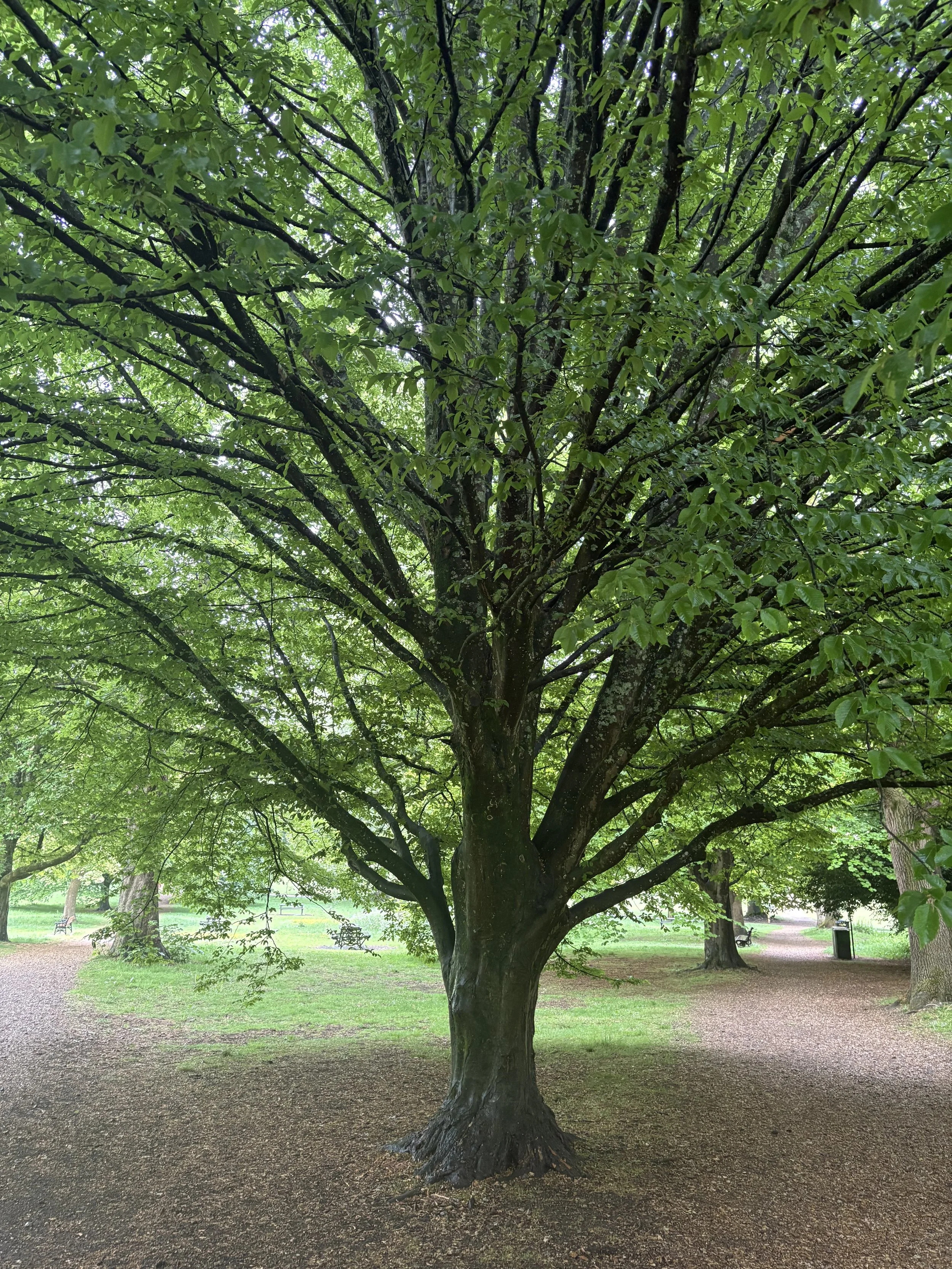
Photo credit: R. Pak
If gardeners want to improve the climate resilience of their garden, they need to improve their pruning game.
Pruning practices must evolve beyond controlling the size and aesthetics of a plant. Of course, if the right plant, was in the right spot, no one would need to control the size of trees or shrubs. Wink, wink. Let's leave that conversation for another post.
If gardeners care about climate resilience, pruning practices must evolve beyond size control and aesthetics.
How Poor Pruning Increases Vulnerability
Common pruning mistakes reduce a plant’s ability to tolerate both wind stress and extreme heat.
The risk to trees from wind damage increases when:
Topping and heading cuts create dense clusters of weakly attached shoots that snap easily in storms
Unbalanced canopies increase leverage and uneven wind loading
Dense interior growth increases sail effect and limits air movement
Large or improper cuts accelerate decay and structural weakness
Trees cannot manage heat and drought stress when:
Over-thinning exposes bark and interior branches to sunscald and tissue damage
Excessive canopy removal reduces leaf surface, limiting cooling and energy production
Heavy pruning after a stressful event and at the wrong time in the growth cycle depletes carbohydrate reserves needed for recovery
Poor branch spacing restricts airflow, increasing canopy temperature
Excessive wounds divert energy from root health and water uptake
In a stable climate, plants may be able to compensate for these mistakes. In a volatile climate, the stress is too great.
This is why pruning must be approached as long-term stewardship rather than seasonal maintenance.

Photo by: J. Topham
Three Lessons from Cass Turnbull’s Guide to Pruning
Cass Turnbull’s work has become essential reading for many master gardeners because it reframes pruning as biologically informed decision-making rather than rule-based cutting.
Three principles stand out:
1. Prune for structure first, appearance second.
Strong branch spacing, dominant leader management, and balanced architecture create trees and shrubs that tolerate stress over decades. Visual form without structural integrity eventually fails.
2. Every cut directs future growth.
Plants respond predictably to cut placement. Understanding bud orientation, energy flow, and growth response allows gardeners to guide structure instead of repeatedly correcting problems.
3. Strategic restraint produces stronger plants.
Well-timed, minimal intervention reduces chronic stress and improves long-term stability.
These principles directly support climate-resilient gardening: work with plant biology, reduce unnecessary stress, and build durable plant systems.
In a changing climate, pruning is no longer optional maintenance. It is a foundational practice for building resilient landscapes.
Show your trees some love,