Protecting your Garden’s Tree Canopy During Watering Restrictions
Hello gardeners!
We currently have watering restrictions where I reside due to government infrastructure upgrades. Although I have an extensive irrigation system in place to water trees, hedges, and shrubs, during this period of restriction gardeners are only allowed to water by hand.
First, let me say this goes against my watering principles as a Master Gardener. Watering by hand is for containers, generally. I subscribe to the theory that it is better to water the garden for longer periods less frequently, so the roots go deeper to find moisture. Watering by hand is something I reserve for newly planted trees to support root establishment. I have written previously about smart watering practices in a blog Exploring New Water-Wise Habits: Another Step Toward Establishing a Climate Resilient Garden.
When drought arrives, the goal is not necessarily to keep every plant looking perfect. Gardens are living systems, and some level of stress is inevitable during extreme weather.
Instead, focus on protecting the long-term structure of your landscape. Prioritize trees, maintain healthy soil, mulch generously, and water strategically when permitted.
A mature tree may take thirty years to grow, but only a few seasons of severe drought stress to decline. Protecting the urban tree canopy today is one of the most valuable investments we can make for the resilience of our gardens, our communities, and the generations that will enjoy them in the future.
As ecologically minded gardeners we have to evolve, adopting new methods as we learn to garden with shifting climate patterns.
How Deep Are the Roots of a Tree?
Many gardeners imagine tree roots extending deep into the soil. In reality, the majority of a tree's feeder roots are surprisingly shallow. Often the feeder roots are found in the top 12 to 24 inches of soil where oxygen, water, and nutrients are most readily available.
Another common misconception is that watering near the trunk is sufficient. The roots responsible for water uptake are usually located much farther from the trunk, extending outward toward and beyond the drip line. When watering a tree, focus on the entire root zone rather than the base of the trunk. The water bags attached to trees in commercial plantings are used to support new transplants. These are not viable long term solutions for trees in residential gardens.
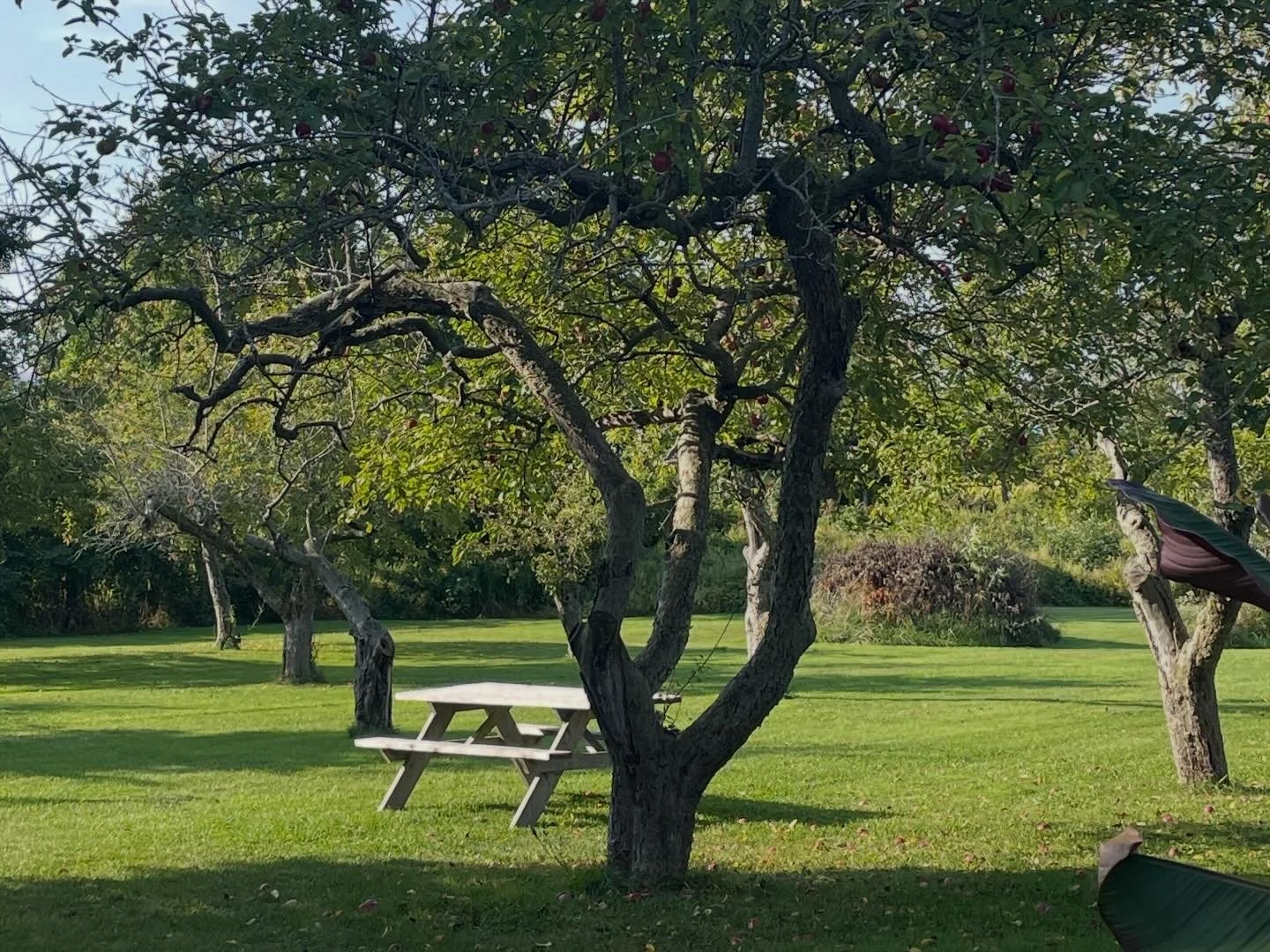
Photo Credit: R. Pak
Protecting Trees During Water Restrictions
Urban forestry research recognizes mature trees as critical assets that provide shade, cooling, stormwater management, carbon storage, wildlife habitat, and improved human health. While annual flowers can be replaced next year and lawns often recover after rainfall returns, mature trees may take decades to replace. Protecting the existing tree canopy should be a priority not only during periods of water restriction but as climate change impacts the growing environment we as ecologically minded gardeners must prioritize the well-being of trees.
If Water is Limited in the Garden What is the Priority?
1. Newly planted trees and shrubs
2. Mature trees
3. Productive vegetable crops
4. Established shrubs and perennials
5. Annual flowers
6. Lawns
A brown lawn is not necessarily a dead lawn. A drought-stressed tree, however, may decline slowly over several years before symptoms become obvious. We often hear or see examples where a tree suddenly fails. Seldom is it the current event, rather it is the accumulation of the effects of previous environmental stressors. See my blog post on It’s Rarely Just One Weather Event Damaging Plants and Trees.
What Not to Do During Heat Stress
Do not prune trees or shrubs during periods of severe water stress or drought.
As a best practice, proper pruning can improve plant health. Under certain conditions when the tree or shrub is experiencing stress, pruning creates unnecessary openings in the tree or woody shrubs bark which may lead to opportunities for pests or disease to enter the tree. In general plants and trees under stress become more prone to pests and disease. Changes in watering conditions can cause stress to a plant's physiology.
If you are interested in understanding more about how pruning can negatively impact the health of trees check out this post Why Trees Fail: The Impact of Poor Practices and Environmental Stress.
Be Aware of Heat Islands
If you have a heavy rock mulch or thick gravel around trees is not helping retain moisture beneath trees. Rock absorbs and radiates heat, increasing soil temperatures and potentially accelerating moisture loss. The same principle applies to concrete retaining walls and patios.
Mulch Is One of the Best Water Conservation Tools
A thick layer of organic mulch, in particular a mulch of arborist wood chips, is an ideal choice for moderating soil temperature, minimizing evaporation and conserving water. Moving forward, I am going to increase areas of mulch below trees wherever possible in my garden. Arborist wood chips are an ideal material because they mimic the natural forest floor, are free of suspected pollutants and are often free.
Apply a blanket of mulch three to four inches deep while keeping it several inches away from the trunk. No mulch volcanoes at the base of trees, please.
Mulch helps:
Reduce evaporation
Moderate soil temperatures
Improve soil structure
Support beneficial soil organisms including caterpillars living in the tree canopy
When watering restrictions are lifted, a drip irrigation system under the mulch, will help to keep the mulch layer hydrated. During water restrictions you may not be able to irrigate, but at other times of the year this is a very efficient way of providing moisture without using large quantities of water.
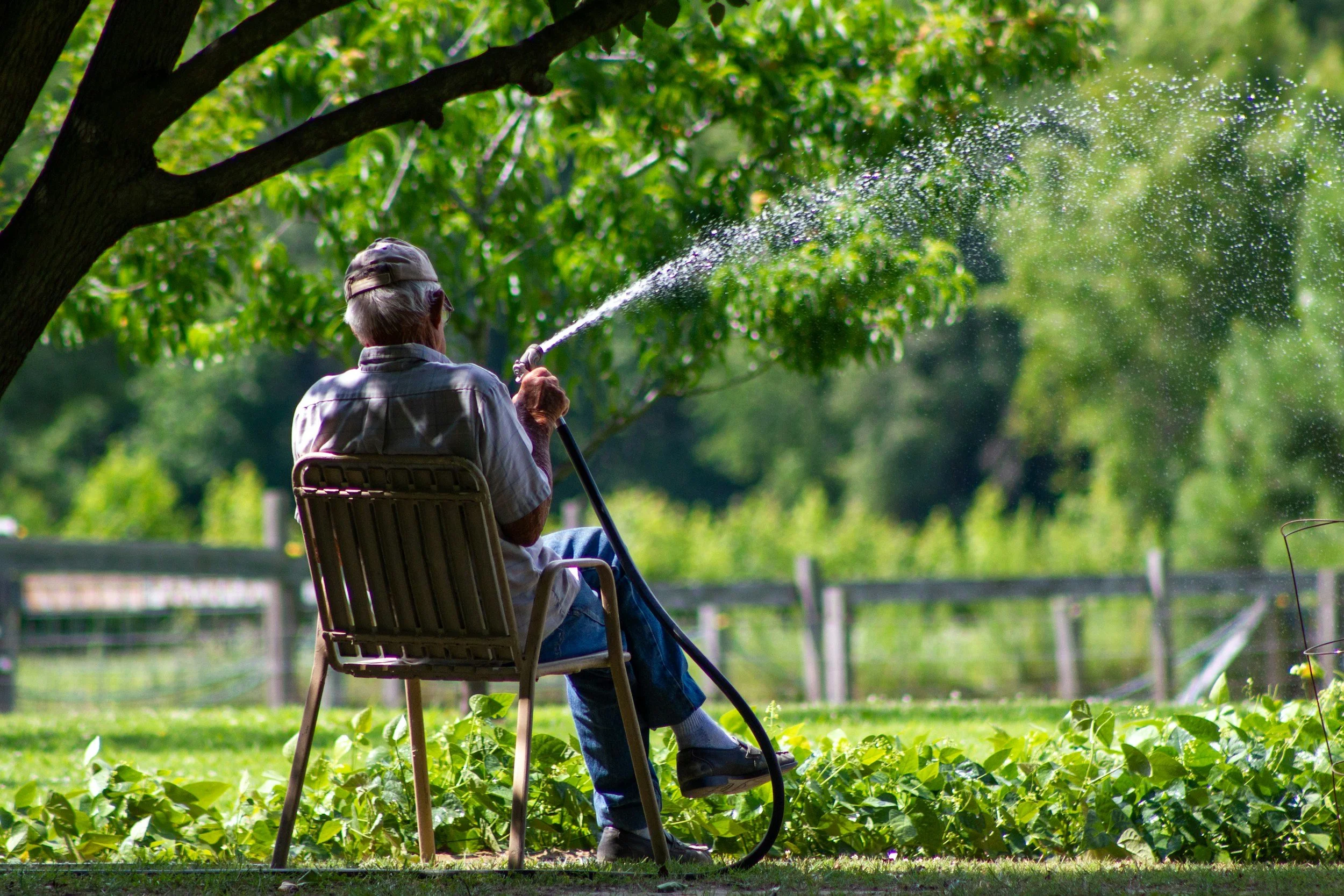
Photo Credit: Unsplash
How to Shift from Good Watering Practices to Restricted Watering
The objective now is not to maintain lush growth.
It is to prevent:
canopy dieback
premature leaf drop
root mortality
long-term decline
In other words, during a period of water restrictions you are watering for survival and resilience, not appearance.
Under normal circumstances, I advocate deep, infrequent watering using irrigation or soaker systems in combination with mulch. The goal here being long term plant resilience. When practiced through the growth of the tree, the tree becomes more resilient to environmental stressors like heavy rain, wind gusts and periods of drought. That is the end game.
During a temporary period of watering restrictions, however, hand watering at the dripline can be an effective compromise. While it may not deliver the same deep soil moisture as a long irrigation cycle, targeted hand watering can help maintain critical feeder roots and reduce drought stress until normal watering practices can resume.
An Effective way to Hand Water Trees
The important factor is to not spray too much water at once resulting in water running off the dry soil. Dial back the spray nozzle to a setting where the water stays on the surface. If you can water every day, try to water one section at a time, around the tree. For example, on the first day, water the south side of the tree, day two water the west side. With this method you are laying down at decent amount of water to create more moisture in the area, than giving a quick spray all around the tree.
The same principle about where to water to a tree does not change with watering restrictions. Focus the water out near the canopy line. Tree roots reach out approximately the same distance as 2/3 the height of the tree. Do not water at the base of the tree. Water further out where the roots are.
Spray as much water on the soil as you have the patience or time for, out at the widest edge of the leaf canopy. Do not spray the tree itself as that simply evaporates. Water the roots.
Build Resilience Before the Next Drought
One lesson from recent summers is that drought preparedness begins long before restrictions are imposed.
The most resilient gardens are designed to capture and hold water naturally through:
Healthy soil rich in organic matter
Larger mulched root zones
Reduced lawn areas
Appropriate plant selection
Rainwater capture systems
Permeable surfaces that allow water infiltration
Urban forestry practices promote green infrastructure designed to increase trees access to rainfall and stormwater rather than relying solely on irrigation.
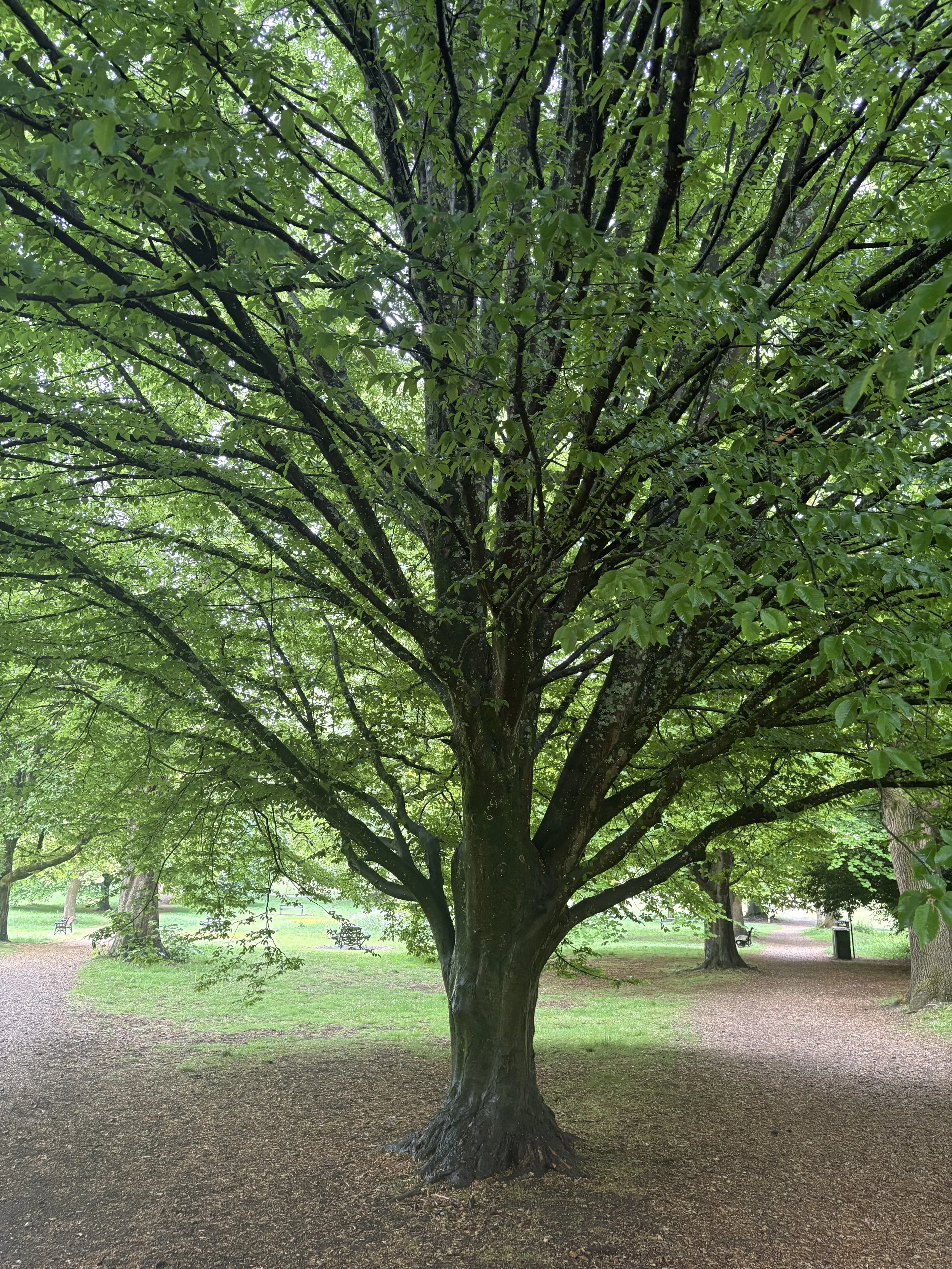
Photo Credit: R. Pak
A Final Thought
When drought arrives, the goal is not necessarily to keep every plant looking perfect. Gardens are living systems, and some level of stress is inevitable during extreme weather.
Instead, focus on protecting the long-term structure of your landscape. Prioritize trees, maintain healthy soil, mulch generously, and water strategically when permitted.
A mature tree may take thirty years to grow, but only a few seasons of severe drought stress to decline. Protecting the urban tree canopy today is one of the most valuable investments we can make for the resilience of our gardens, our communities, and the generations that will enjoy them in the future.

Photo Credit: Unsplash
Happy gardening! I will be thinking of you in those quiet moments when I am standing there watering my trees.