It’s Rarely Just One Weather Event Damaging Plants and Trees
Hello gardeners!
When a plant declines, we often look for a single cause.
A late frost
A heat wave
Too much rain
But in a changing climate with unpredictable and extreme weather events, plant stress is rarely the result of one isolated event. More often, it is the accumulation of several. I think this is also the case for trees. We blame a big windstorm for a huge branch coming down, but I am now starting to question whether a soggier than normal period prior to the wind might carry some blame, or last year's drought. Gardeners need to broaden their lens and observe the sequence.
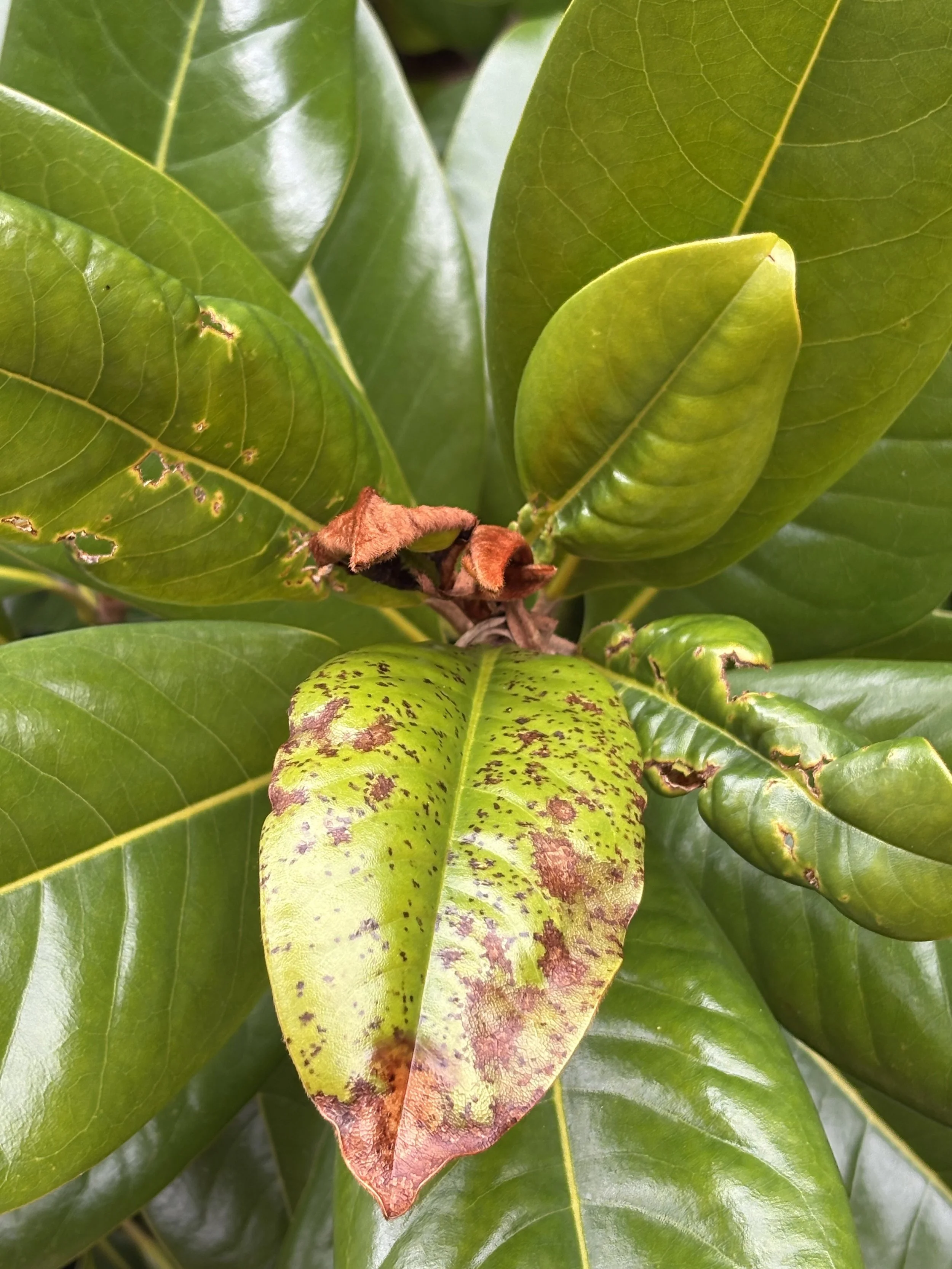
Photo: R. Pak
A DAMAGING SEQUENCE
An early warm spell in February encourages buds to swell. Tissues begin to lose some of their cold hardiness. Then a hard frost arrives and damages those tender cells. This injury likely will not kill the plant outright, but it disrupts important vascular flow within the plant's structure. At the very least we are going to see a reduced number of viable buds that expand into leaves.
The plant responds by reallocating stored carbohydrates to repair and replace damaged growth.
Then spring turns unusually wet.
Soils remain saturated. Oxygen levels around the roots decline and the system of root respiration slows. Now the nutrient uptake becomes less efficient overall. The plant has already drawn down its reserves for repair and now struggles to generate sufficient energy at the root level. What do we observe? Less robust leaf production. Leaves may be smaller. Growth on the overall plant may appear uneven. I was taught that when we see uneven growth in a plant or a single dead branch at the top of the plant, we should consider root damage.
You know what is coming next. By early summer, an extended, "hotter than normal" spell settles in. These high temperatures force the plant's stomata to close to prevent water loss. A natural protective mechanism. Now photosynthesis slows down. Respiration is the process where plants convert glucose into energy, using oxygen and releasing carbon dioxide. When temperatures are too high, plants often experience a higher rate of respiration, which can lead to energy depletion and heat stress rather than cooling. The plant is now spending more energy than it is producing.
The plant has now experienced early budding due to a warmer than normal winter, early tissue damage due to a frost, a soggy period impacting the efficiency of roots, and then a period of extended respiration causing the plant to spend more energy than it can produce. How is that for stress?
And if late summer wildfire smoke follows, light levels drop, leaf surfaces accumulate particulate matter from the air, and photosynthetic efficiency declines further.
At no single point did one event “cause” the problem. It was the sequence.
This is an important shift in perspective for gardeners.

Photo Credit: J. Topham
We have traditionally responded to visible damage in isolation. Scorched leaves? Increase water. Frost damage? Prune. Yellowing foliage? Fertilize. If the goal is to develop climate resilient gardens, then we as gardeners need to step away from reacting to one event and begin to observe the pattern to which the plant is responding.
Resilience is not simply the ability to survive one extreme. It is the capacity to absorb disturbance and still maintain function across multiple events. And that capacity depends on energy reserves, root health, soil structure, and timing. This is why broadening our gardening lens matters now.
A CHECKLIST TO CONSIDER WHEN OBSERVING PLANT DAMAGE
When we notice damage, instead of asking “What happened?”, we might ask “What has this plant already endured this season?”
Did it leaf out early?
Was it sitting in saturated soil?
Did it experience prolonged heat?
Has it been asked to regrow more than once?
Plants do not completely reset between weather events. Stress compounds.
AS GARDENERS, THIS MEANS TWO THINGS
First, we must pay attention not only to current conditions, but to what came before and what may come next. Supporting soil oxygenation after heavy rains may improve a plant’s ability to handle an upcoming heat event. Avoiding unnecessary pruning after frost may preserve leaf area needed for recovery.
Second, we need better records. Memory smooths over detail. But patterns live in data and details.
When did buds begin to swell?
How long did soils remain saturated?
When did temperatures first exceed 30°C?
How did each species respond?
Even brief seasonal notes begin to reveal sequences.
Over time, journaling becomes less about documenting tasks and more about observing relationships: between temperature and budbreak, between rainfall and root vigor, between early stress and late-season decline.
Climate resilience is not built through reaction. It is built through awareness.
Extreme weather events are becoming more common. But it is their order, their timing, and their compounding nature that shapes plant outcomes. If we widen our lens from single events to seasonal sequences, we begin to garden with greater foresight.