Greenwashing in Gardening: How to Shop More Intentionally
Hello gardeners!
I love visiting garden centres and farm stands that sell plants.
There is something I find irresistible about all the plants. The pots, the tools are interesting, but it is really all the plants that get me. And increasingly, many of those products come labelled with words and images that suggest they are better for the planet.
Natural | Eco-friendly | Sustainable | Earth-friendly
But how do we know what those words actually mean?
This is where the term greenwashing comes to mind.
Greenwashing generally refers to environmental claims that make a product, business or practice appear greener than the evidence supports. Canada's Competition Bureau cautions consumers about vague or misleading environmental claims. The overall impression created by these words, images and packaging matters because it could imply the product is better for the earth than it may actually be.
And the garden industry is no different from any other retail industry.
The purpose of this blog is not to suggest we stop buying garden products. It would be silly of me to say I am going to stop buying plants. What I am suggesting is we become a little more curious about what we are buying.
Look beyond the green packaging. The words used on plant tags and garden products are selected to pack a big marketing punch.
Nature imagery can be powerful. Green leaves, water, forests and earthy colours can immediately make a product feel environmentally responsible. But the picture itself doesn't tell us very much.
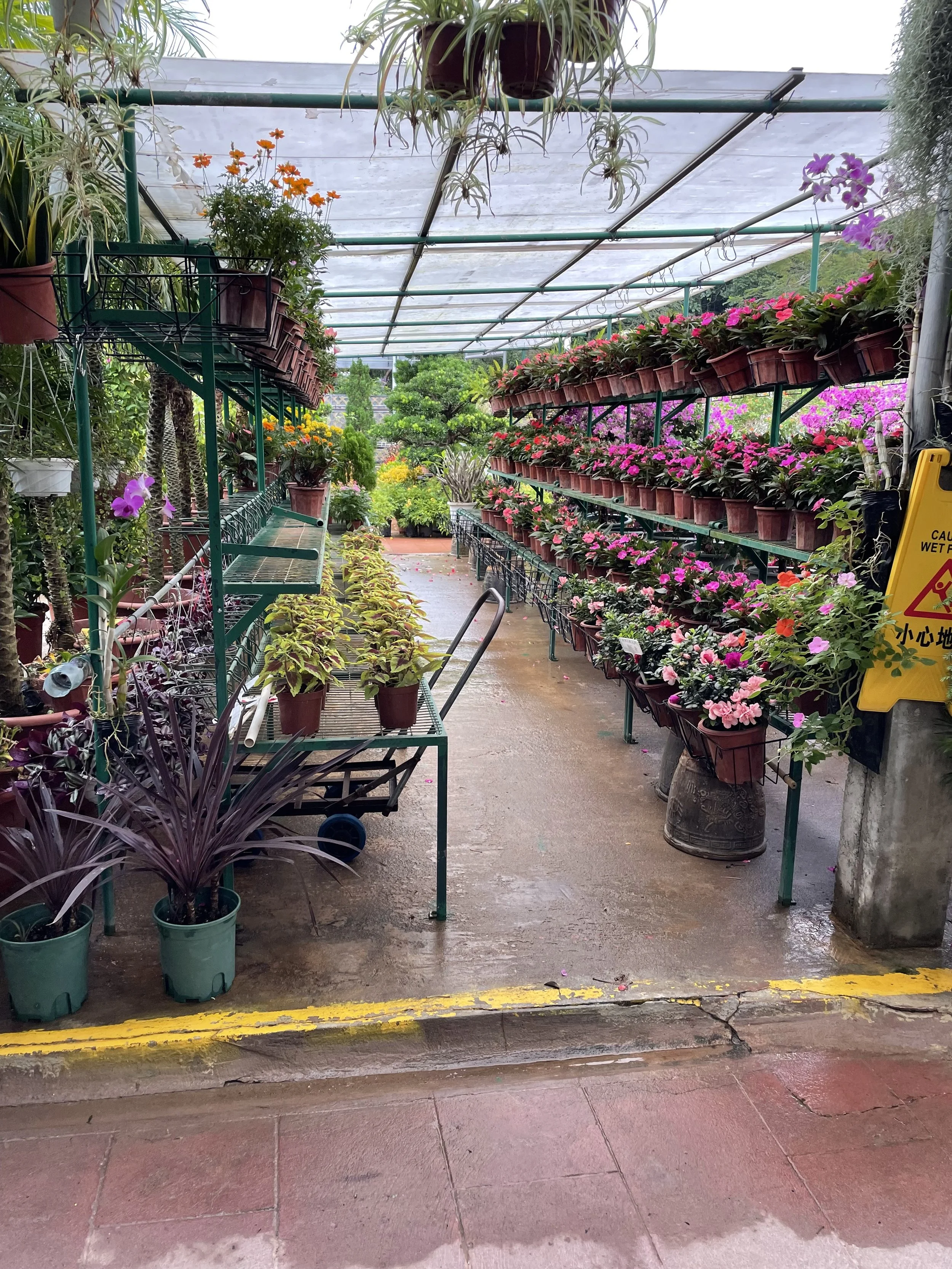
Photo Credit: R. Pak
This is a nursery I use to go to in Hong Kong.
Instead, ask these three questions:
What exactly is the environmental benefit being claimed?
“Eco-friendly” doesn't tell us much. What has actually changed? Is the claim about the material, packaging, manufacturing, transportation, use or disposal? The claim should be specific and it should be something that is important to you. For example, I look for products made in Canada and, when possible, locally in British Columbia. That's one of my own values. Yours may be different. The point is to know what matters to you and see whether the product you are considering buying actually aligns with it.
What about the rest of the product's life?
This is where things get interesting.
A product may eliminate a plastic bottle, for example, but that doesn't automatically make the entire product dramatically greener. The materials, manufacturing, transportation, use and eventual disposal all contribute to its environmental footprint. Looking at only one attribute can give us an incomplete picture.
And sometimes the supposedly greener product costs considerably more.
That doesn't necessarily mean it isn't the better choice. But I think it's worth asking whether we're paying a premium for a meaningful environmental improvement or simply for the feeling that we're making a better choice.
Do I need this?
This is the question I use most often for my own purchases.
I don't want to buy three new products to figure out whether I can replace the one I already own. To my way of thinking, I am questioning whether the footprint of buying several products to find one I like, may be greater than the one product I am replacing that does the job well but I am wondering if there is a greener option. The overall footprint may be greater than I am prepared to commit to. So I consider simply continuing to use the original product because replacing it creates another round of manufacturing, packaging and transportation.
Sometimes the most environmentally thoughtful purchase is the one we don't make.
Always keep your intentions at front of mind. Remember what values are important to you. Remember my made in Canada comment. Buy what you need but make sure it aligns with your values.

Photo Credit: iStock
I'm not trying to eliminate every purchase from my garden. I'm trying to reduce the waste created by my gardening hobby while still enjoying the hobby itself.
Because gardeners are consumers too and perhaps ecological gardening isn't about refusing to buy any plants or garden products. Perhaps it's about becoming better at reading between the lines, looking past the slick marketing, questioning and choosing what aligns with your priorities.
We don't have to be perfect, or have an “all or nothing approach” to make a difference to our garden's environmental footprint.
We can simply look a little closer before we buy.
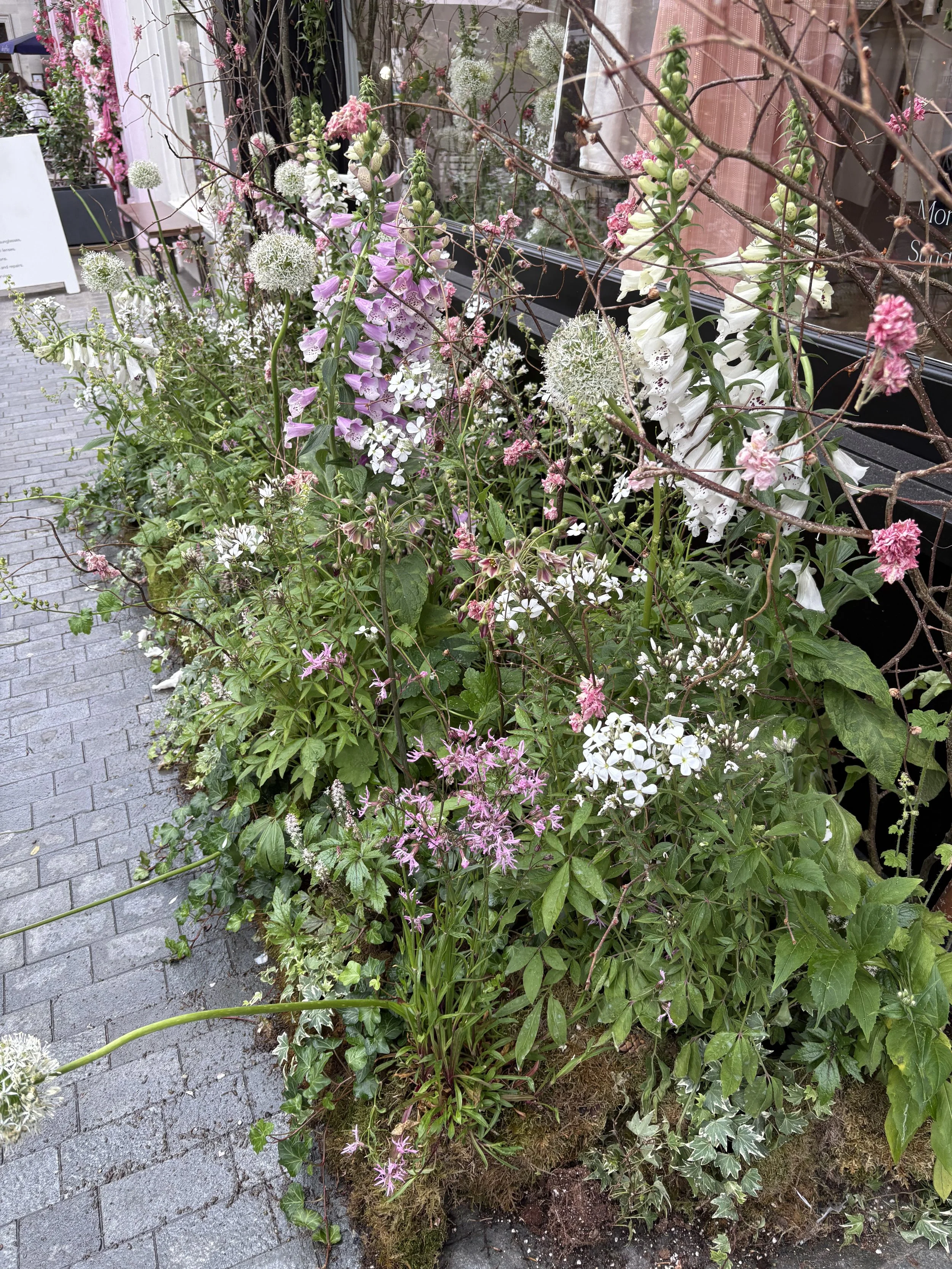
Photo Credit: R. Pak
This was a photo I took in London UK 2025. Many stores had floral displays as this was during the Chelsea Garden Show. This particular display was so wasteful in my opinion because the plants were not in pots just on display au natural but of course they will not survive in situ like this and I am sure they arrived in pots. Just struck me as very wasteful.
I hope this helps you make better choices when you are enjoying time at your local garden centre.
I have never met a plant I did not want to buy, so simply taking a moment to think about the inputs that put the plant in my hand, helps me slow down the excitement and make smart choices for my garden.