Extreme Weather and the New Reality for Gardeners
Hello gardeners!
EXTREME WEATHER IS REWRITING THE GARDENER'S HANDBOOK
Across the world, gardeners continue to notice something unsettling: familiar weather patterns no longer hold. Rain falls in violent bursts instead of steady rhythms. Drought conditions stretch on, then ends with a flood. Late summer skies filled with smoke for months. These shifts aren’t isolated, and they’re not imagined. These events are symptoms of a rapidly warming planet—one that is reshaping our gardens whether we’re ready or not. And as uncomfortable as it is to admit, we as gardeners have reached a point where simply tweaking a few techniques won’t keep pace with these unpredictable environmental stressors wreaking havoc on beloved plants.
The shoulder seasons seem to be the most erratic and unpredictable. Drought to deluge, heat dome to atmospheric river. It is all part of a larger pattern driven by a buildup of greenhouse gases.

Flooded neighbourhood street. Photo: R. Pak
WHEN GREEN ISN'T ACTUALLY GREEN: RETHINK OUR GARDENING LEGACY
While it is tempting to treat gardening as inherently “green,” the truth is more complicated. The way we have gardened in the past has contributed to the problem. Industrial soil amendments, peat harvesting, fertilizers, gas-powered tools, and constant consumption have a footprint. Even the garden industry itself—nurseries, commercial greenhouse growers, plastic pots, shipping—is far from environmentally neutral. Yet the advice we often hear in response to climate change is simply: “Buy different plants. Buy drought-tolerant plants. Buy fire-smart plants.” As eco-conscious gardeners we cannot simply buy our way out of the effects of climate change. This gardening paradox is becoming impossible to ignore: we’re trying to adapt to climate change by participating in the very system that helped accelerate it. The question now is "How do we garden without feeding that cycle?"
THE PLANT BUYING PARADOX: ARE WE SHOPPING OUR WAY INTO CLIMATE STRESS
But here’s the truth: facing these questions isn’t a burden—it’s an invitation. Gardeners have always been observers, tinkerers, experimenters, and caretakers. We’re not powerless here. In fact, we’re uniquely positioned to lead the shift toward regenerative practices that heal rather than harm. Regenerative gardening asks us to go deeper than plant lists and new purchases. It pushes us to rebuild soil health, protect water cycles, foster biodiversity, and create systems that store more carbon than they release. It encourages us to work with ecological processes instead of against them. Most of us are already mulching and composting in the garden but can we expand to begin choosing resilient plants suitable to our actual conditions, reducing inputs, and embracing cycles of renewal over cycles of consumption.

The sheer quantity of plastic pots a gardener may collect over a season is alarming. Few commercial growers have the capacity to wash and prepare them for reuse.
Photo credit: iStock
REGENERATIVE GARDENING: A PATH FORWARD FOR CLIMATE ANXIOUS GARDENERS
The way forward isn’t about perfection. It’s about gardeners stepping into a more honest, more stewardship, and ultimately a more hopeful relationship with the land. Extreme weather is a wake-up call, but it’s also a turning point. We have the chance to remake our gardens into places that restore balance—and ourselves in the process.
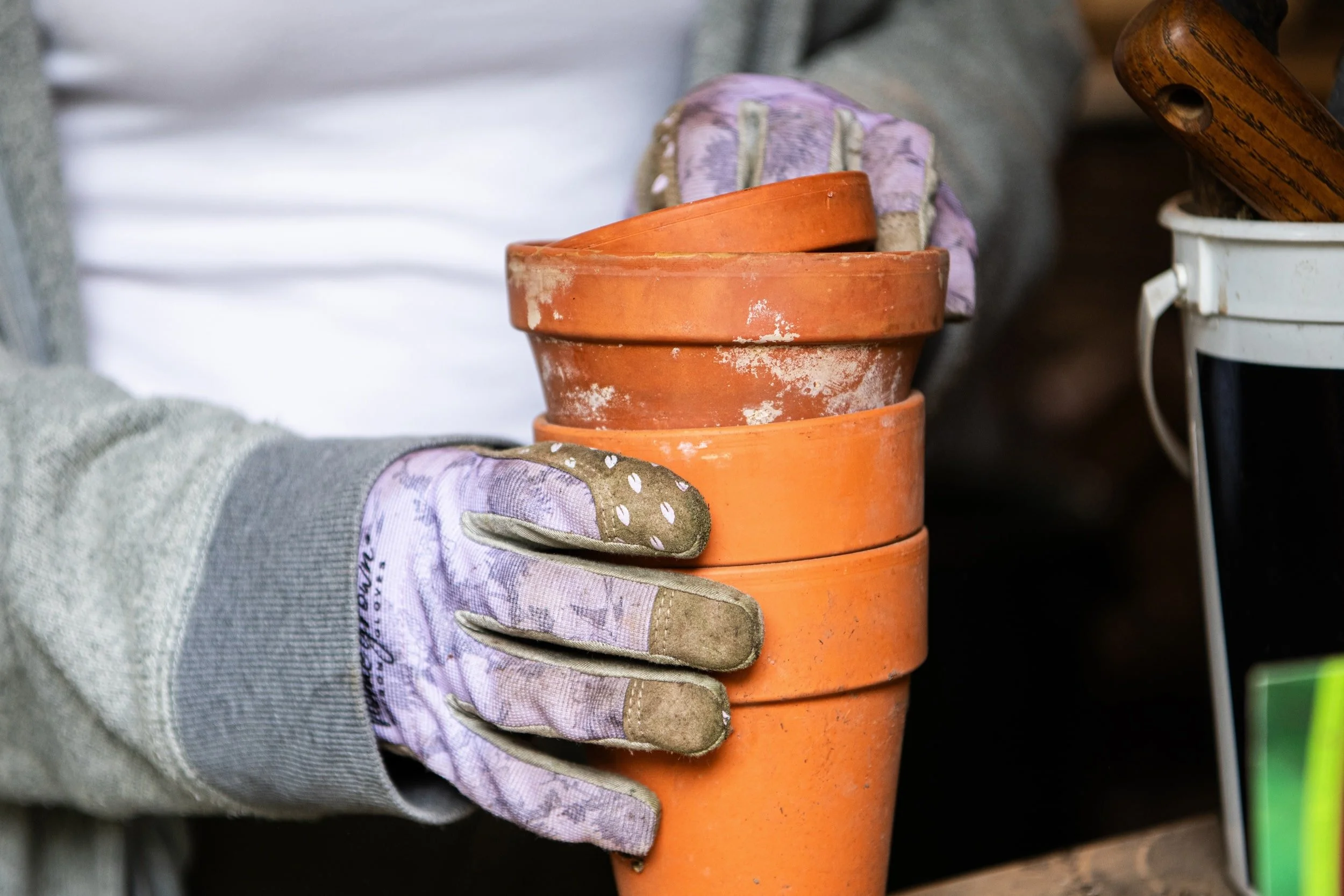
Photo: J. Topham
Not doom and gloom
One of the things I often hear when I listen to people speaking about climate change and gardening is the phrase “We need to do things differently.” Then nothing. So few people seem to have answers on how we move forward when it comes to our gardens. I think one of the most important things we can do as concerned gardeners, is to begin asking questions. How are my plants responding to heavy rains, smoke or hotter than normal temperatures? How can I better support the plants and trees through these conditions? What can I do to encourage greater biodiversity in my garden or my community? Do I need to add synthetic fertilizers? When I bring a new plant home, what is in the soil that will now be in my soil?
As we approach a new year, I invite you to ponder this question - if the weather conditions we are experiencing are unlike historical weather patterns, why are we gardening the same way our grandparents did?
Remember these changing conditions are an invitation to become more effective gardeners.